
Specialist Steel Structure Solutions
Mining & Resources Structures
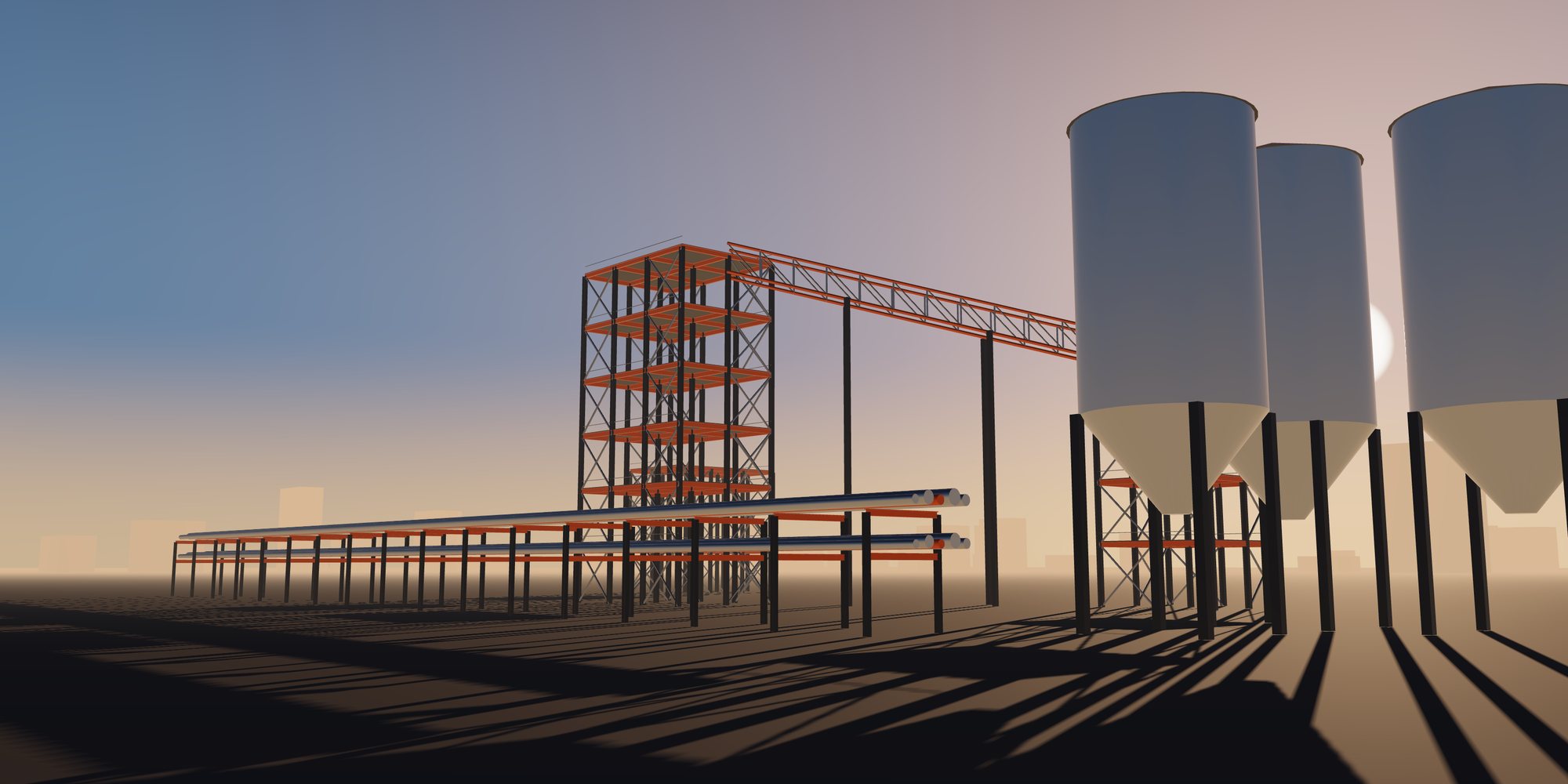
Steelwork for mineral processing plants, conveyor supports, transfer towers and maintenance platforms.
Solution Overview
Mining structures are often located in remote sites with harsh environments. Modularisation, robust connections and wear-resistant details reduce site labour and improve availability of the plant.
Typical Applications
- Mining Processing Structures
- Conveyor Supports
- Transfer Towers
- Maintenance Platforms
- Equipment Support Frames
Sector challenges
Challenges We Engineer For
Remote sites with limited labor
Our engineering response Modular, bolt-together designs with trial-assembled interfaces reduce site welding and the number of skilled trades needed on site.
Material build-up and surge loads
Our engineering response Design loads account for spillage, build-up and blocked chute conditions agreed with the process engineer, not only clean operating states.
Abrasion and wear
Our engineering response Wear zones are detailed with replaceable liners and access for maintenance, separating wearing parts from primary structure.
Vibrating equipment supports
Our engineering response Screen and crusher frames are checked for dynamic response and fatigue, with connection details chosen for reliable long-term performance.
Engineering Solutions
Mining and mineral processing structures carry some of the harshest load combinations in industrial steelwork. Our engineering team models conveyor belt tensions, material surge and build-up, chute and bin impact, screen and crusher dynamics, maintenance lifting and wind on tall transfer towers. Seismic actions are included where the site requires, and we check robustness so that a damaged member or connection does not lead to disproportionate collapse of plant that personnel work beneath every day.
Connections are designed to be robust, repeatable and practical for site crews working in remote conditions. We prefer bolted field connections with generous tolerance, standard bolt sizes across the project and minimal site welding. Fatigue is assessed at vibrating equipment supports and conveyor drive frames, and wear-prone areas are detailed with replaceable liners and access for inspection and changeout.
Engineering Considerations
- Conveyor and material-handling loads including surge and build-up
- Module sizes for road transport to remote sites
- Abrasion, dust and corrosion exposure
- Access stairs, handrails and safety standards
One coordinated scope
From Engineering to Delivery on Site
Design optimization, fabrication, quality control, surface protection, export logistics and erection support managed as one scope, so interfaces between design, shop and site stay under control.
-
Design Optimization
In remote mining projects, the cost of site labor and equipment often outweighs the cost of steel. We optimize by modularizing conveyor galleries, transfer towers and platforms into transportable units that are bolted together rather than built piece by piece. Repeating truss panels, standard trestle types and common connection details reduce engineering and fabrication effort, while early agreement on module sizes avoids redesign when transport routes and crane availability are confirmed.
-
Fabrication Solutions
Typical fabricated items include conveyor gallery trusses, trestles and bents, transfer tower frames, bin and hopper supports, screen and crusher support steel, stairs, walkways and handrail systems. Welding follows the AS/NZS 1554.1, AWS D1.1 or EN 1090 execution class requirements specified for the project. Modules are trial-assembled in the shop where bolted interfaces, conveyor alignment or chute fit-up are critical, and every piece is marked with durable identifiers for straightforward assembly in remote laydown areas.
-
Quality Assurance
Each project follows an inspection and test plan with hold points for primary structural members, module assemblies and vibrating equipment supports. Materials are traced from mill certificates to piece marks, welds receive visual inspection and the ultrasonic or magnetic particle testing required by the specified category, and module dimensions, bolt patterns and conveyor alignment points are checked before dispatch. Records are compiled into a QC dossier structured by plant area and module number.
-
Surface Protection
Mining environments combine abrasion, dust, moisture and sometimes acidic or saline process conditions. We commonly recommend hot-dip galvanizing for walkways, stairs, handrails and secondary steel, and robust multi-coat systems for primary members selected to ISO 12944 categories such as C4 or C5, with CX considered for aggressive process areas. Detailing avoids ledges that trap spillage, and touch-up procedures for site bolting areas are included with the coating specification.
-
Export & Logistics
Remote mine sites demand careful logistics planning. We size modules to the transport route and lifting equipment, pack steel by plant area and erection zone, and sequence shipments so critical-path structures such as transfer towers and conveyor trestles arrive first. Bolts and small items are bagged and labeled by module. Break-bulk and container shipments are combined as needed, with export documentation, marking schedules and packing lists supplied for customs and site receipt.
-
Erection Support
We support the erection contractor with module assembly drawings, erection sequences and lifting information including weights and centers of gravity. Our engineers can provide input to method statements for tall towers and long conveyor galleries, including temporary stability checks during staged erection. Where agreed, we provide technical supervision or advisory visits during the assembly of key modules and alignment of conveyor structures.
What You Receive
Typical engineering, fabrication and quality documents for this type of structure. The final list is agreed for each project.
- Structural design calculations including dynamic checks
- Module breakdown and transport envelope drawings
- BIM model and fabrication shop drawings
- Conveyor gallery and trestle drawing sets
- Inspection and test plan with QC dossier by module
- Galvanizing and coating records
- Bolt and fastener schedules by module
- Erection sequence and lifting data
Global supply
Supplying Projects Worldwide
Engineering and documentation aligned with the codes, approvals and logistics of each market we supply.
-

Steel Structures for the United States
Structural steel for US projects designed and documented to AISC, ASCE 7 and AWS practice, with the submittals and traceability US…
-

Steel Structures for Canada
Steelwork for Canadian projects to CSA S16 design and CSA W59 welding, with welding-company certification and cold-climate material…
-

Steel Structures for Australia
Fabricated steel for Australian projects to AS 4100, AS/NZS 5131 and AS/NZS 1554.1, with construction category, cyclone wind actions and…
-

Steel Structures for New Zealand
Seismic-ready steelwork for New Zealand to NZS 3404 design and AS/NZS 5131 fabrication, with ductility, connection capacity design and…
-


Steel Structures for Europe
Structural steel components for European projects designed to the Eurocodes with National Annexes, and executed to EN 1090 with the…
-

Steel Structures for Japan
Steel supply for Japanese projects under the Building Standards Act framework, JIS-designated materials and fabricator grading, with…
-

Steel Structures for South Korea
Steelwork for Korean industrial and building projects aligned with the Korean Building Code and KS material standards, with fast-track…
-


Steel Structures for Southeast Asia
Regional steel supply across Singapore, Malaysia, Thailand, Vietnam, Indonesia and the Philippines, where each country's code basis…
-


Steel Structures for the Middle East
Steelwork for Gulf and Middle East projects specified to international codes by consultants, with extreme heat, sand and saline exposure…
-
Other International Markets
For markets not listed separately, we start from the project specification: governing code, material standards, inspection regime and…
Frequently Asked Questions
How large can modules be for a remote mine site?
Module size is driven by the transport route, permits and lifting equipment available at site rather than by fabrication. We review route and crane information early and set a transport envelope that guides the design. Modules are then planned within that envelope.
Do you supply walkways, stairs and handrails as part of the package?
Yes. Access steelwork is designed and fabricated together with the primary structure so that interfaces are consistent. These items are usually galvanized for durability and supplied in kits by plant area.
Can you work to Australian standards for mining projects?
Yes. We can design to AS 4100 and AS/NZS 1170, fabricate to AS/NZS 5131 and weld to AS/NZS 1554.1 where these are specified. We can also work to US, Canadian or European codes when the project requires them.
Discuss Your Mining & Resources Structures Project
Share your drawings and requirements. Our engineering team reviews the scope, the governing design code and the delivery conditions, then responds with the next steps.
Helpful to include
- Architectural or structural drawings, or a sketch of the layout
- Project location and site conditions
- Governing design code and any client specifications
- Key loads: cranes, equipment, wind or seismic data if known
- Required scope: design, fabrication, coating, supply, erection support
- Target schedule and delivery terms
Files attached to the request form are stored privately and are visible only to authorized staff.